

Check Point Threat Alert: SamSam and Maktub Ransomware Evolution

Executive Summary
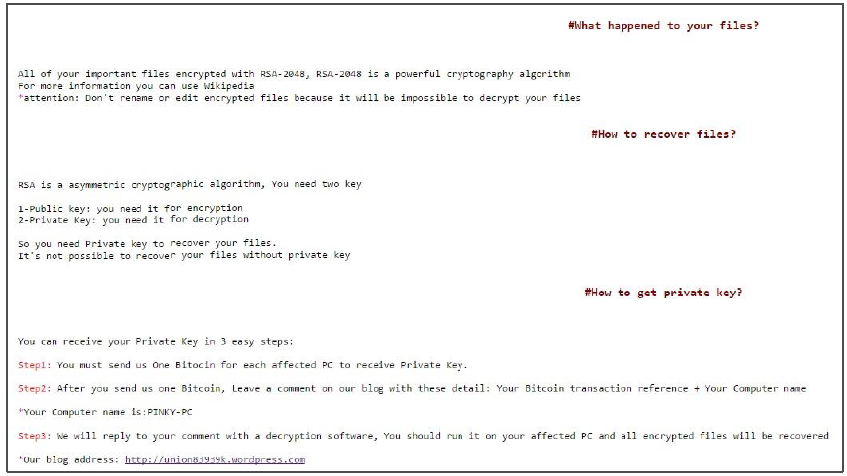
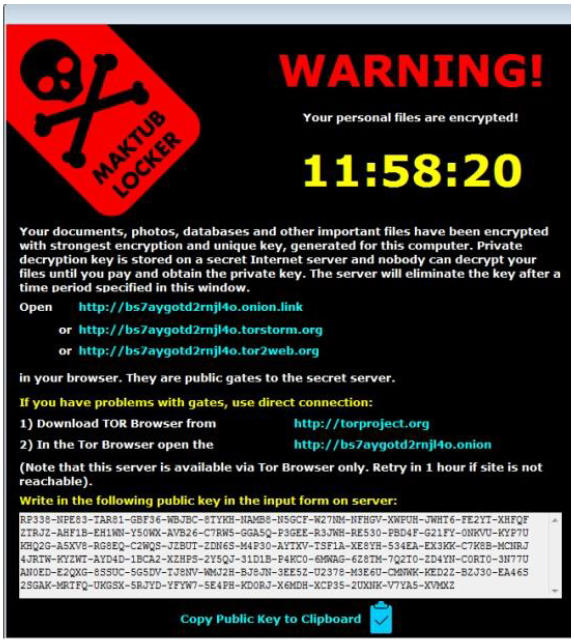
New and evolving ransomware campaigns, dubbed ‘SamSam’ and ‘Maktub’, use techniques not commonly observed in previously known ransomware. SamSam spreads by targeting and infecting servers that contain unpatched vulnerabilities. Maktub and Samsam do not communicate with a C&C server to encrypt files on an infected computer. SamSam’s primary target is the healthcare industry.
Description
- SamSam ransomware has an unusual infection method. Instead of spreading by spam/phishing emails, it scans for vulnerable servers with unpatched software.
- Unlike other ransomware campaigns, there is no need for any user action such as clicking on a certain link or opening a malicious attachment for the infection to take place. The attackers can trigger the ransomware remotely once it has found vulnerability in the server and penetrated the network.
- Once a network has been breached, the ransomware spreads through the local network to infect additional computers.
- Maktub not only encrypts files but also compresses them, most likely to speed up the encryption process.
- SamSam and Maktub are both independently acting ransomware, meaning that once they are installed on a system, they encrypt the files without any need to communicate with a C&C server.
- While this “offline encryption” is rare among ransomware, Check Point researchers published this research blog about another family of offline ransomware last November.
Check Point Protections
- Check Point IPS blade includes various protections for the JBoss platform whose exploitation was observed in the SamSam campaign. In addition, the following protection blocks the Maktub malicious mail attachments: Suspicious Executable Mail Attachment
- Check Point Anti-Virus & SandBlast include relevant Samsam and Maktub indicators for known malicious domains and related files, and includes these Anti-Virus protections:
- Ransomware.Win32.Samsam.*
- Ransomware.Win32.Maktub.*
Additional Technical References
You may also like

AI Attacks Are No Longer Experimental: Key Findings from the March-April 2026 AI Threat Landscape
Between late December 2025 and mid-February 2026, Gambit found that ...

Hacktivists, Ransomware, and a 124% Surge Across DACH
Hacktivism and ransomware targeting organizations across Germany, Austria, and Switzerland ...

Before the First Whistle: How Cyber Criminals Are Targeting World Cup 2026
The FIFA World Cup 2026 is one of the most anticipated sporting ...

When the Ransomware Gang Gets Hacked: What the Gentlemen Leak Reveals About Modern Ransomware Risk
Key Findings The Gentlemen RaaS has 400+ public victims and ...